Dressage | Customizable
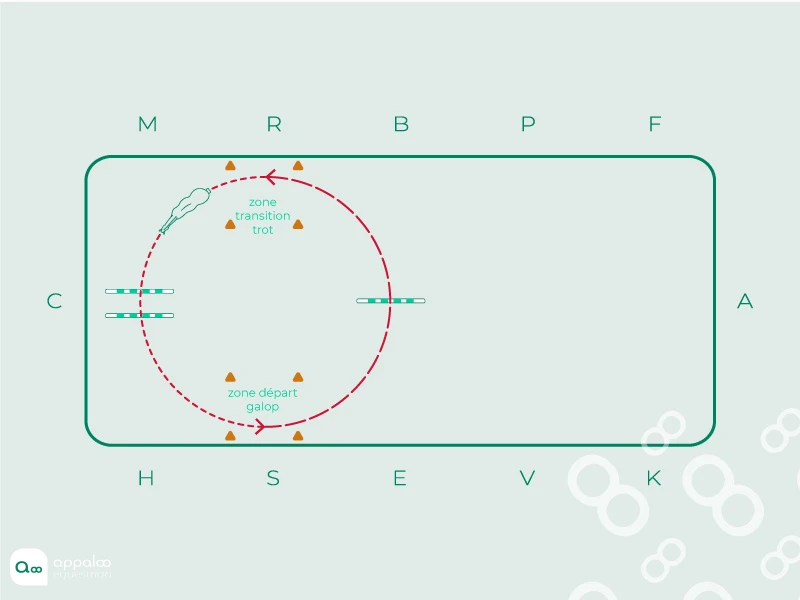
Obtain canter departs and transitions to walk or trot that are calm, honest and precise.
Dressage | Customizable
Obtain canter departs and transitions to walk or trot that are calm, honest and precise.
Dressage | Easy
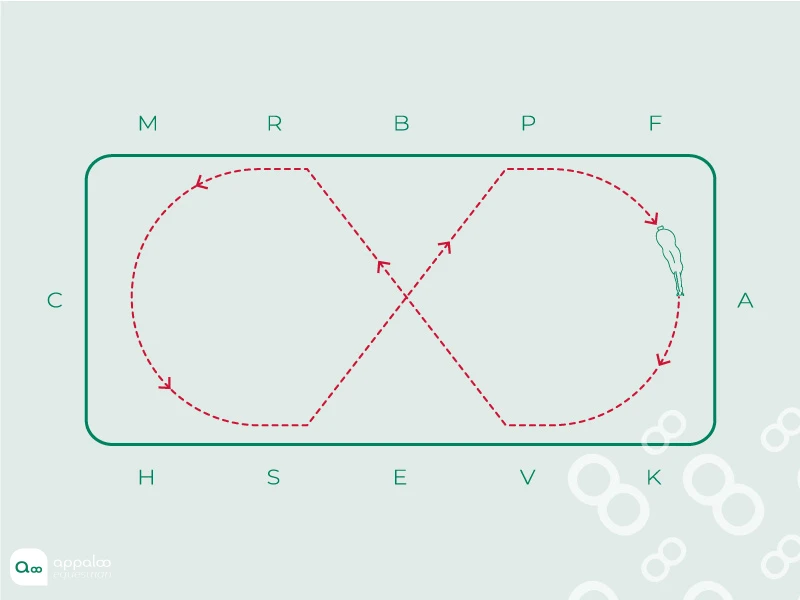
Used to work young horses on straightness, accuracy of the line and tempo
Dressage | Hard
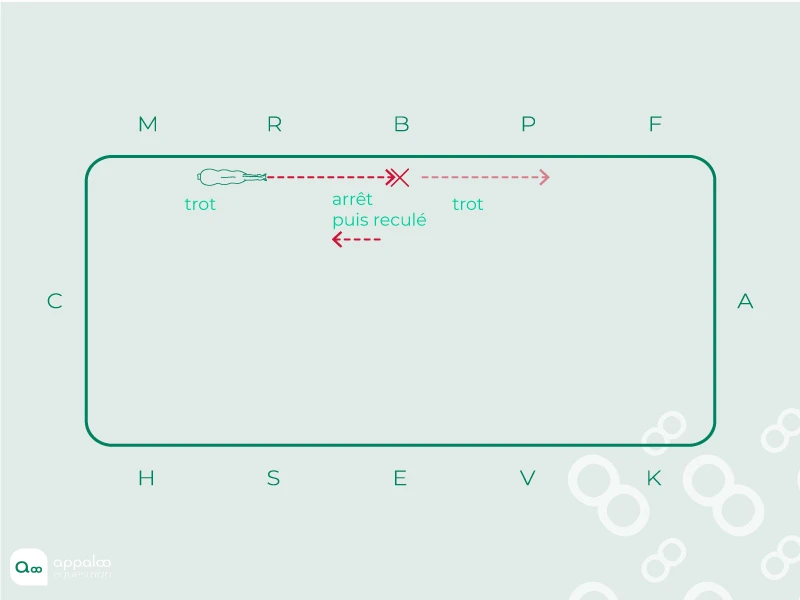
To obtain a horse that halts promptly and in balance, steps back straight and lightly, and moves off into trot again without delay. Engagement + control + strengthening Muscles targeted: Abdominals → major work (halt + rein-back) Hindquarters → engagement under the body Back → lifts and stabilises Overall balance
Dressage | Easy
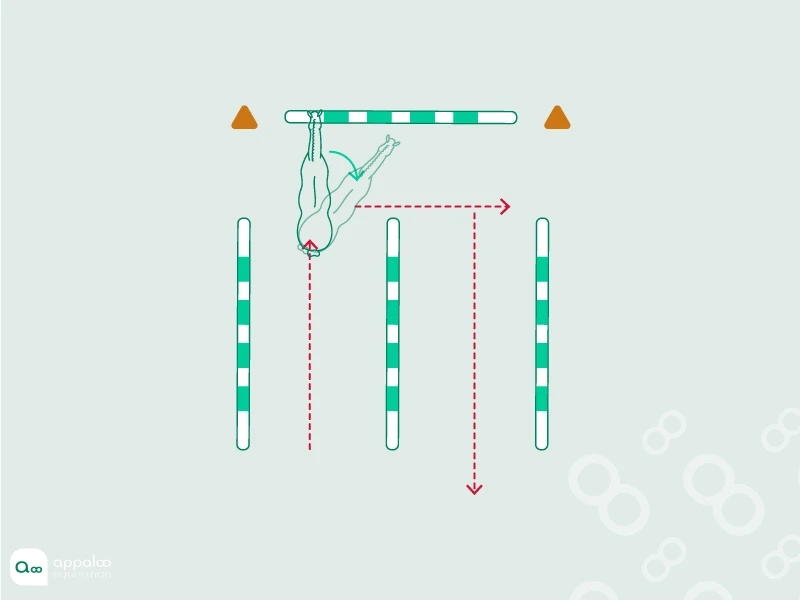
Lateral displacement of the shoulders
 PREMIUM
Dressage | Hard
Achieve a canter–walk transition on a 10-meter circle.
 PREMIUM
Dressage | Medium
Be able to strike off into canter from the walk on a 10-meter circle.
 PREMIUM
Dressage | Medium
Begin developing the lowering and engagement of one hind leg.
 PREMIUM
Dressage | Medium
Be able to halt from the walk and rein back straight for 4–5 steps along the track.
 PREMIUM
Dressage | Easy
On a 20-meter circle, lengthen the canter into a medium canter for 8 strides, then collect the canter for 8 strides.
Dressage | Medium
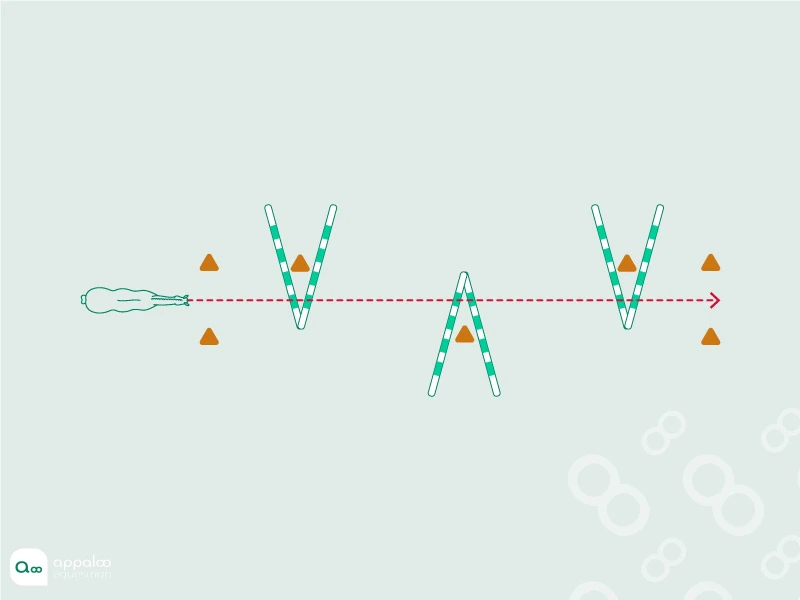
To have a horse that is straight between the rider’s hands and legs, regardless of the obstacle.
Dressage | Medium
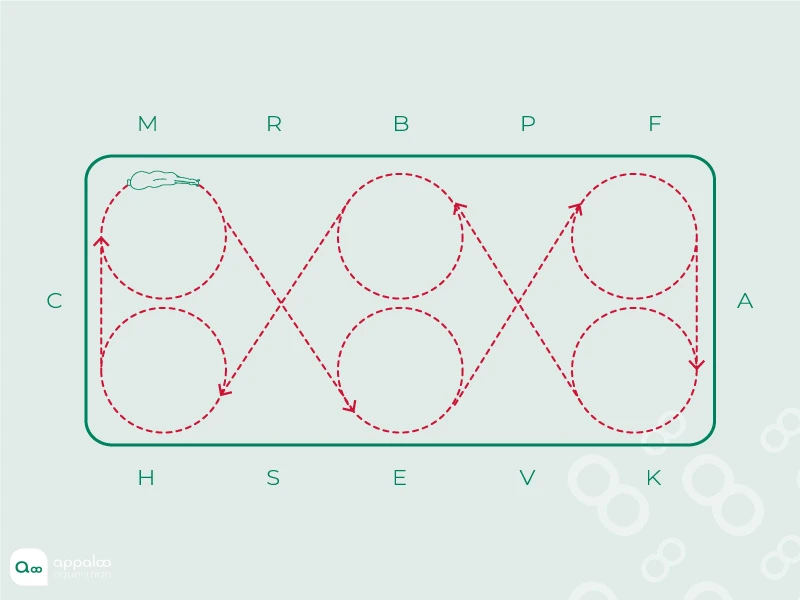
🎯 Keep the horse supple.
Dressage | Easy
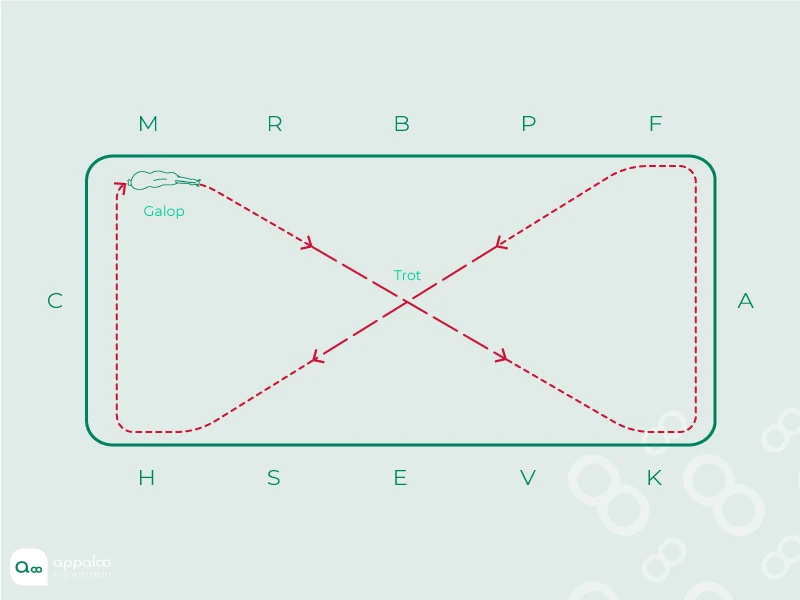
Introduce flying changes
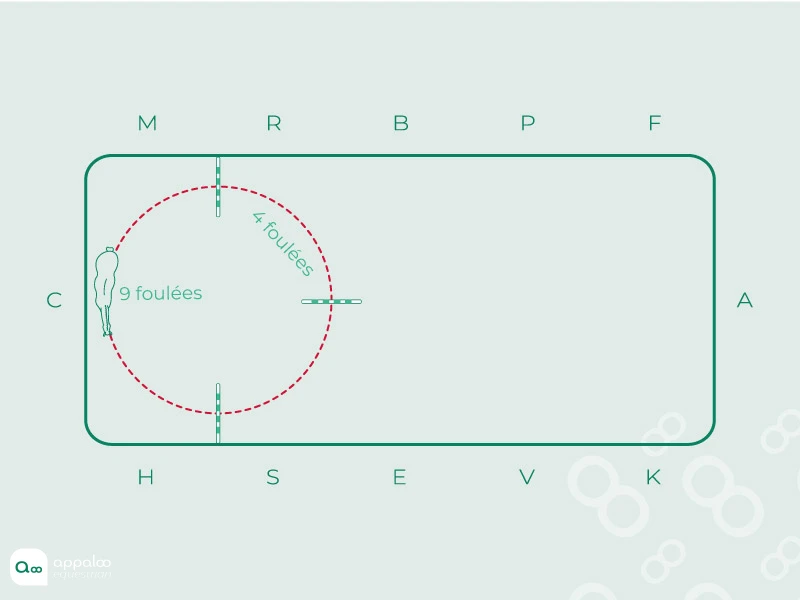
Dressage | Medium
Manage stride length and rhythm on a curve
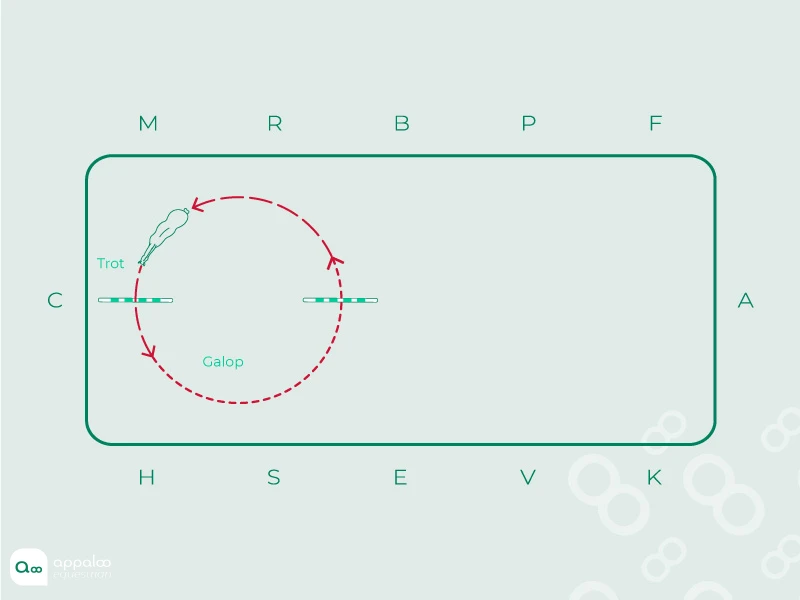
Dressage | Easy
Successfully ask for transitions between trot and canter while paying attention to your position.
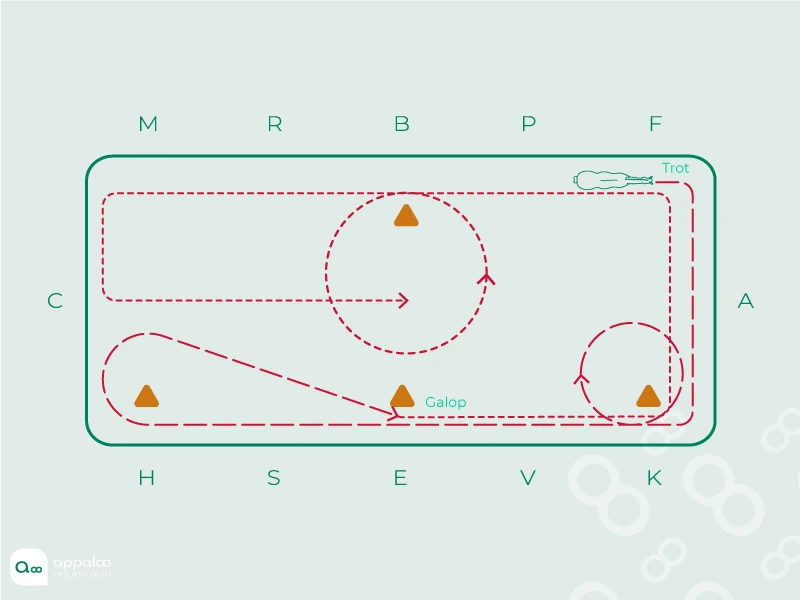
Dressage | Easy
To be comfortable and proficient when riding circles and voltes.
 PREMIUM
Dressage | Easy
Serpentine patterns are excellent exercises to challenge the horse’s lateral balance and therefore the tone of his thoracic sling, thanks to the continuous alternation from right to left.
 PREMIUM
Dressage | Medium
Variations in frame and head height help challenge the horse’s balance and therefore the tone of his thoracic sling.
 PREMIUM
Dressage | Medium
La variation d'amplitude est un excellant indicateur de la tonicité de la sangle thoracique. Cette variation met l'équilibre du cheval à l'épreuve et lui demande donc de "se tenir" donc de maintenir son centre de gravité, et donc de solliciter sa sangle thoracique.
 PREMIUM
Dressage | Customizable
The walk-trot transition is a good indicator of the tone of the thoracic sling. If your horse tries to avoid using its thoracic sling, the quality of your transition will suffer.
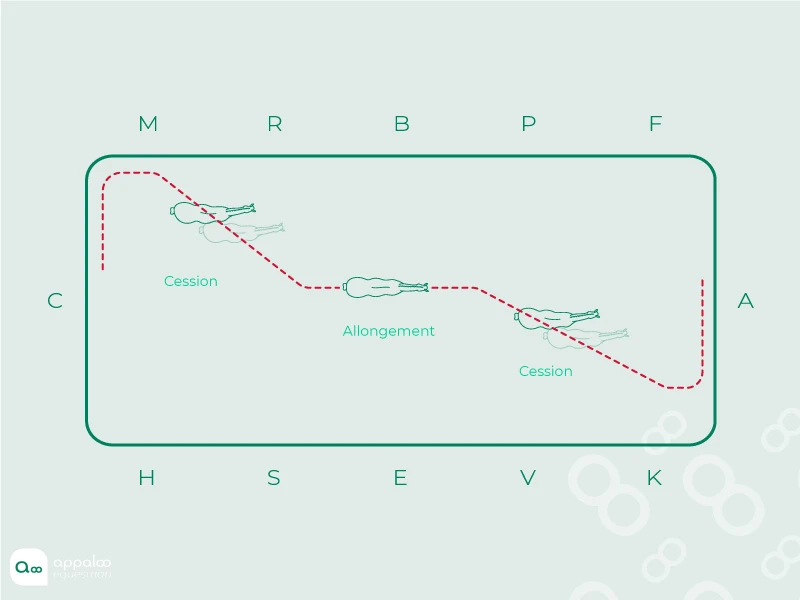
Dressage | Hard
To supple the horse, improve hindquarter engagement, and increase stride length.
Learn, train and improve your dressage skills with our riding exercises, suitable for all levels, training areas and equipment setups.
Whether you're a beginner, intermediate or advanced rider, you'll find sessions with a difficulty level suited to you.
Whether you train in an arena, round pen or outdoors, you'll discover exercises adapted to your training environment.
Whether you have no poles or 10, no cones or 15, you'll find sessions that require exactly the equipment you have available — no more, no less.
Our search bar allows you to filter the results so they match your needs as closely as possible. This means you can find personalised dressage session ideas based on your level, training area and equipment.
Did you know that dressage is often described as the art of developing the horse's movements into an elegant and harmonious performance? This discipline is all about creating a true partnership between horse and rider. To succeed in dressage, you need to follow key principles such as relaxation, lightness and harmony.
Through flatwork, you'll gradually develop a higher level of dressage with your horse.
We help you achieve your goals with our exercise guides, which you can follow almost like a recipe. Each guide includes a diagram so you can easily visualise the movements and arena setup required.
You'll also find a summary of the type of session, training area and equipment needed.
Once you have your diagram and all the ingredients for your recipe, it's time to get practical. Each exercise is explained in three simple steps: objectives, how to perform the exercise and potential difficulties.
The first section explains which key dressage fundamentals you'll be working on. These may include improving your horse's accuracy, suppleness, balance, bend or responsiveness.
The second section gives you detailed instructions for performing the exercise from start to finish, including the aids and actions you should use.
The final section highlights the difficulties you may encounter and explains how to overcome them if needed.
If you'd like to discover new dressage exercises in a different way and get a sneak peek at what's coming next, while interacting with us and the Appaloo Equestrian community, follow us on social media: Instagram, Facebook, TikTok and Pinterest!
You now have all the tools you need to improve your dressage, which is ultimately the foundation of every equestrian discipline!
And let's be honest: dressage also means seriousness, elegance and dancing with your horse. Not to mention the white breeches, the white saddle pad… and the sore muscles the next day!
Do you have exercise ideas for this discipline that aren't yet available on our website? We invite you to share them with other riders.
Simply click "Submit My Exercise" at the top of any exercise guide and fill in the form. It's simple, quick and easy ;)
Have a great dressage session with Appaloo Equestrian!
Find all these sessions in the app, and save them in one tap!
Download the appPlease sign in to save your favorites.